
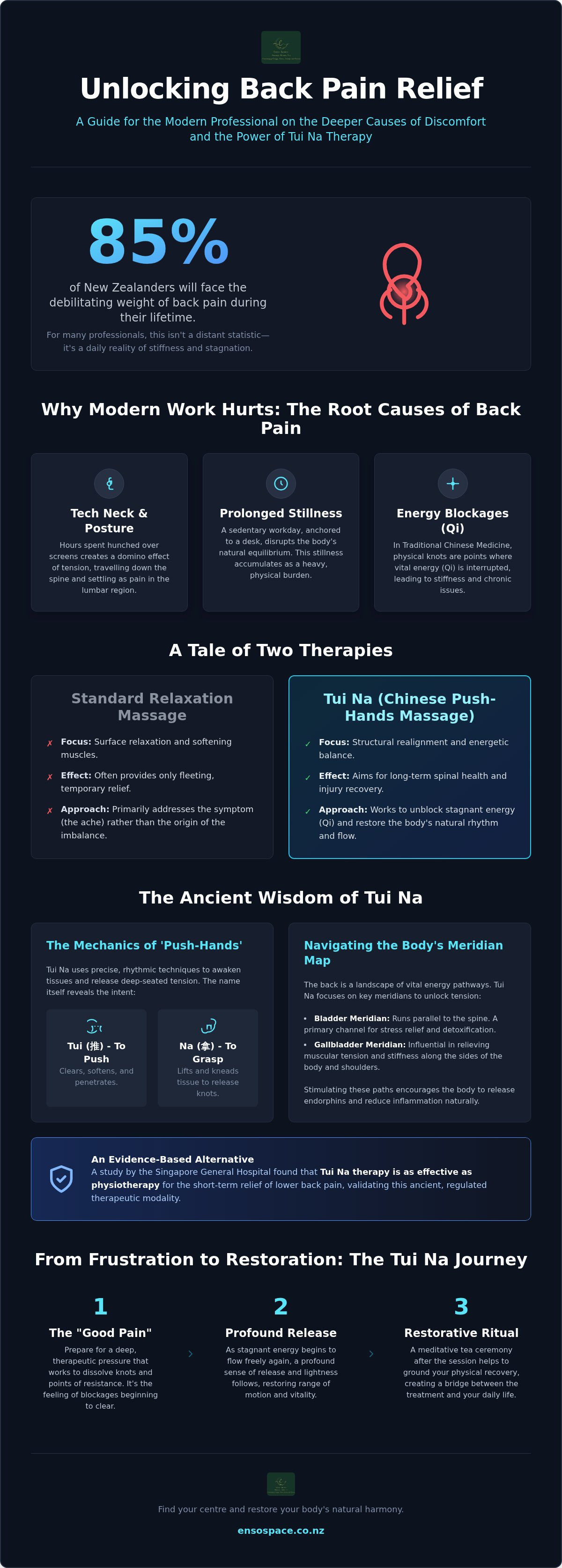
Eighty-five per cent. That is the number of New Zealanders who will face the debilitating weight of back pain during their lifetime. For many professionals in the Newmarket hub, this isn't a distant statistic. It's a daily reality. Stiffness. Stagnation. A heavy, persistent ache that lingers long after the laptop is closed. It feels like being physically and mentally blocked, trapped in a body that has forgotten how to move with ease.
You've likely tried treatments that merely mask the surface. It's frustrating when the relief is fleeting. We understand that true recovery requires more than a temporary fix. By seeking Tui na for back pain relief, you're choosing a path of structural realignment and energetic balance. This ancient art, specifically Tui Na (Chinese Push-Hands Massage), works to unblock stagnant energy and restore your body's natural rhythm. Discover how this regulated, holistic practice can significantly reduce your pain and improve your posture. We'll explore the science of meridian flow and show you how to move from a state of frustration to one of total restoration and ease.
Key Takeaways
- Understand why the specific physical strains of a Newmarket professional life require a deeper approach than standard relaxation massages.
- Discover how Tui na for back pain relief uses rhythmic "Pushing" and "Grasping" to unblock stagnant energy and restore mobility.
- Learn why this regulated therapeutic modality is a powerful, evidence-based alternative for long-term spinal health and injury recovery.
- Prepare for the "good pain" of a Tui Na (Chinese Push-Hands Massage) session and the profound sense of release that follows.
- Find out how the meditative ritual of a tea ceremony grounds your physical recovery, creating a bridge between the treatment and your daily life.
The Weight of Modern Living: Why Back Pain is More Than Physical
The city moves fast. We often stay still. Auckland’s rhythm is one of constant motion, yet for many professionals in Newmarket, the day is spent anchored to a desk. This stillness is heavy. It's a quiet burden that accumulates over hours of focused work and long commutes on the Southern Motorway. By the time you step out of the office, your back feels like it's carrying the weight of the entire day. This is more than a simple muscle ache. It's a sign that your body's natural equilibrium has been disrupted.
A standard rub-down might offer a fleeting moment of respite. It softens the surface. However, it rarely reaches the deep-seated tension held within the spine. This is where Tui na for back pain relief differs from conventional approaches. It doesn't just address the symptom. It looks for the origin of the imbalance. At Enso Space, our philosophy is grounded in the belief that to move better, you must first find your centre. We bridge the gap between the external demands of a busy life and your internal need for restorative harmony.
The Newmarket Professional’s Dilemma
Screens demand our focus. Our bodies pay the price. The phenomenon of "Tech Neck" is often the silent origin of a domino effect that travels down the spine, eventually settling as a sharp or dull pain in the lumbar region. In Traditional Chinese Medicine, the Bladder meridian runs parallel to the spine. It acts as a primary channel for energy and a reservoir for stress. When you're hunched over a laptop in a Newmarket high-rise, this meridian tightens. The flow of vital energy becomes restricted. A holistic approach isn't a luxury in this fast-paced urban environment; it's a necessity for maintaining both physical mobility and mental peace.
Energy Blockages: The Invisible Cause of Stiffness
Stagnation. It starts as a subtle heaviness. Eventually, it manifests as a physical knot. These knots are more than just tight muscle fibres; they are points where your Qi, or vital energy, has been interrupted. Tui na allows a practitioner to identify these blockages before they crystallise into chronic injuries. By using specific rhythmic techniques, we can dissolve these points of resistance. Tui na for back pain relief works by unblocking these paths, allowing your natural energy to circulate freely once more. When the energy flows, the stiffness vanishes. You aren't just recovering your range of motion; you're restoring your sense of vitality and clarity.
The Ancient Wisdom of Tui Na: Unblocking the Body’s Natural Flow
Tradition. Balance. Restoration. Tui Na (Chinese Push-Hands Massage) is far more than a simple sequence of movements. It's a sophisticated system of therapeutic manipulation that has served as a cornerstone of wellness for millennia. While Western Swedish massage prioritises surface relaxation and deep tissue focuses on the physical fascia, Tui Na seeks to harmonise the entire person. It addresses the body's structural foundations while simultaneously unblocking the rivers of energy that flow beneath the skin. By targeting specific "command centres" or acupoints, this practice offers a profound method of Tui na for back pain relief that resonates through every layer of your being.
The Mechanics of 'Push-Hands' Therapy
Precision matters. The name itself reveals the intent: Tui means to push, and Na means to grasp. These aren't random actions. They are rhythmic techniques designed to wake up the tissues. A practitioner might use brushing to clear the surface, kneading to soften the muscles, or rolling to penetrate deep into the lumbar region. By using their palms, thumbs, and even elbows, the therapist applies a focused pressure that reaches far beyond the reach of lighter therapies. It's a structural wake-up call. It's a signal to the body that it's time to release the old and invite the new.
The Meridian Map: Navigating the Back
The back is a landscape of vital pathways. When we address spinal health, we focus heavily on the Bladder and Gallbladder meridians. These channels are the keys to unlocking physical and mental tension. The Bladder meridian is the primary channel for detoxification and support. By stimulating these paths, we encourage the body to release endorphins and reduce inflammation naturally. This isn't just ancient theory; modern science is beginning to validate these traditional methods. For instance, a study by the Singapore General Hospital found that Tui Na therapy can be as effective as conventional physiotherapy for the short-term relief of lower back pain.
At Enso Space, we invite you to experience this bridge between ancient wisdom and modern recovery. It's about more than just a treatment. It's about finding a point of origin for your long-term well-being through intentional, slow living.
Tui Na for Back Pain Relief: How Traditional Therapy Rivals Modern Physiotherapy
Evidence speaks. A randomized clinical trial on Tui na for back pain demonstrates that this ancient practice is a formidable peer to modern clinical methods. While Western physiotherapy often targets isolated muscle groups or specific skeletal misalignments, Tui Na views the back as a vital landscape of connected energy. It's a system that treats the whole person. By addressing the deep-seated tension in the meridians, we ensure that the relief isn't just a surface-level fix. It's a structural realignment that supports the body's natural ability to heal itself. This holistic focus leads to outcomes that resonate far beyond the treatment table.
Tui Na vs. Physiotherapy: A Balanced View
Choice is personal. Recovery is a journey. Traditional physiotherapy often focuses on exercise-based rehabilitation and strengthening. This is essential for structural integrity. However, Tui Na offers a unique "hands-on" advantage that machines and independent exercises cannot replicate. The rhythmic, intentional pressure of a practitioner's hands provides a profound psychological sense of safety. It calms the overactive nervous system. For those experiencing acute flare-ups, Tui na for back pain relief provides immediate, tangible release by manually dissolving the physical knots that restrict movement. It provides the stillness required for the body to begin its own restoration.
Why Aucklanders are Choosing Eastern Wisdom
The Auckland wellness landscape is evolving. We see a growing preference for natural, non-invasive therapies that offer a bridge between ancient wisdom and modern demands. People are seeking a sanctuary. They want an environment that feels like a retreat rather than a sterile clinic. Exploring the depth of Chinese Meridian Massage Auckland reveals how these practices provide a much-needed anchor in a busy world. It's about more than just the physical work; it's about the space in which that work happens. A premium sanctuary provides the mental grounding necessary for physical recovery to truly take hold.
The SGH study highlights that Tui Na is remarkably effective for immediate pain reduction, rivaling conventional physio in the short term. At Enso Space, we believe the true power lies in the synergy of these approaches. By using Tui Na (Chinese Push-Hands Massage) to address the immediate blockage and Meridian Massage for long-term maintenance, we help you find a sustainable centre. This combination ensures you don't just feel better for a day. You develop the foundations to live better every day.
What to Expect During Your Tui Na Session
Step inside. Breathe. The transition from the bustle of Remuera Road to the stillness of Enso Space is the first step in your recovery. Unlike more passive therapies, Tui Na (Chinese Push-Hands Massage) is an active dialogue between the practitioner and your body. It is vigorous. It is intentional. You may encounter what many describe as "good pain"—that profound, aching sensation where a deep-seated knot finally begins to yield. This is not discomfort for its own sake; it is the feeling of long-stagnant energy being invited back into motion.
For those seeking Tui na for back pain relief, the experience is a journey through layers of physical and energetic tension. Preparation is simple but vital. To get the most from your session, we suggest the following:
- Wear loose clothing: Tui Na is traditionally performed over clothes or a soft drape. Natural, breathable fabrics are best.
- Arrive early: Give yourself ten minutes to settle your mind and enjoy a bowl of tea before the work begins.
- Eat lightly: Avoid a heavy meal at least an hour before your appointment to allow your energy to focus on healing.
The Sensation of Release
Pressure meets resistance. Then, release follows. As the practitioner navigates the meridians of your back, you might feel a sudden warmth or a subtle tingling sensation. This is a sign of returning circulation. It's the "wake-up call" your tissues have been waiting for. Open communication is the foundation of a successful session. If a particular point feels too intense, or if you feel a surge of release, let your therapist know. This ensures the pressure remains spot on, bridging the gap between therapeutic intensity and meditative rest.
The Aftercare: Integrating the Relief
The work continues after you leave the table. You might feel a sense of lightness, or perhaps a heavy, restorative tiredness. Both are natural. They are signs that your body is processing the shift and clearing out the "old" energy. Choosing Tui na for back pain relief is an act of detoxification. To support this, prioritise hydration and gentle rest for the remainder of the day. Many guests find that addressing their back tension leads to secondary gifts, such as a deeper night's sleep or a more settled digestive system.
To understand more about how this recovery unfolds over the coming days, you can explore our guide on Tui Na massage benefits Auckland. This integration is where the physical work becomes a lasting change. If you're ready to begin this dialogue with your body, we invite you to book your initial consultation at our Newmarket sanctuary.
Beyond the Massage: Finding Lasting Restoration at Enso Space
Stillness. Peace. A return to self. At Enso Space, we believe that Tui na for back pain relief is only one part of the journey. True restoration requires a space that honours the transition from the external world to your internal centre. Our sanctuary is designed to be a bridge. It connects the fast-paced energy of Auckland with the slow, intentional rhythm of traditional healing. Here, the treatment is the beginning of a deeper conversation with your body, one that continues long after you leave the table.
A Sanctuary in Newmarket
Nestled at 17 Remuera Road, our centre offers a quiet reprieve for the city’s professionals. It's a place where the air feels lighter. Whether you're seeking a midday reset between meetings or a post-work grounding, our proximity to the Newmarket hub makes wellness accessible. The experience doesn't end when the massage stops. We invite every guest to participate in our tea ceremony experience, a meditative ritual that anchors the physical release of Tui Na. This transition allows your body to integrate the work, grounding your spirit before you return to the urban flow. It's about finding harmony in the middle ground between ancient tradition and modern life.
The Path to Preventative Wellness
Recovery is a practice. It's not a single event. While many come to us in a state of crisis, the most profound benefits of Tui na for back pain relief are found through consistency. Moving from "fixing" a problem to "maintaining" your foundation is the key to long-term vitality. We want to move you away from the cycle of reactive care and into a state of sustained structural health. By prioritising regular meridian care, you prevent the accumulation of stress that leads to chronic stiffness and fatigue.
To support this journey, we offer a NZD 200 annual membership for local residents. This membership is the key to a pain-free year, providing priority booking and exclusive pricing that makes it easier to weave holistic care into your lifestyle. It's an investment in your future self. Our goal is to help every guest Feel Better, Move Better and Live Better. This is your invitation to step out of the cycle of frustration and into a state of restorative harmony. Experience the relief of Tui Na at Enso Space today and discover the depth of a truly holistic recovery in the heart of Auckland.
Finding Your Centre and Reclaiming Movement
Restoration is a choice. It's a commitment to your long-term vitality. We've explored how Tui na for back pain relief bridges the gap between ancient meridian wisdom and the modern demands of an Auckland lifestyle. By moving beyond surface-level symptoms, you allow your body to unblock stagnant energy and rediscover its natural, fluid rhythm. At our sanctuary at 17 Remuera Road, our expert practitioners use traditional techniques to help you move from physical frustration to restorative harmony.
True wellness is found in consistency. Our NZD 200 Annual Wellness Membership is designed to support this journey, ensuring that professional care becomes a sustainable part of your routine. Whether you seek immediate release from a flare-up or a preventative path to keep pain at bay, we invite you to experience the Enso difference. Ground your recovery in our serene Newmarket environment and begin your path to feeling, moving, and living better. Book your Tui Na session at Enso Space Newmarket today. Your body is ready for the release.
Frequently Asked Questions
Is Tui Na for back pain relief more painful than a regular massage?
Tui Na is more vigorous than a standard relaxation treatment. It involves active pushing and grasping to reach deep blockages within the tissues. While you might encounter "good pain" as long-held tension yields, it isn't meant to be distressing. Our practitioners adjust the intensity to your comfort level. This rhythmic pressure is essential for effective Tui na for back pain relief, as it wakes up the muscles and restores vital energy flow.
How many sessions of Tui Na will I need to see an improvement in my back pain?
Every body responds differently. Many guests feel a significant reduction in stiffness after just one session. For persistent issues, we typically recommend a series of three to five treatments to consolidate the results. Because chronic pain often stems from long-term habits, our NZD 200 annual membership is a popular choice for Newmarket professionals. It allows for consistent, preventative care that keeps your back mobile and your energy balanced throughout the year.
Can I get Tui Na if I have a slipped disc or a diagnosed medical condition?
Safety is our priority. If you have a diagnosed medical condition like a slipped disc, you must consult your GP or specialist before booking. While Tui Na is a regulated profession in New Zealand under the HPCA Act, it is a holistic therapy rather than medical physiotherapy. Once cleared by a doctor, our practitioners can work carefully with your body's limits to support your recovery and manage the secondary tension surrounding spinal injuries.
What should I wear to a Tui Na (Chinese Push-Hands Massage) session?
Comfort is key. Tui Na is traditionally performed over loose, lightweight clothing rather than directly on the skin. We recommend wearing natural fibres like cotton or linen that allow for ease of movement. Avoid tight jeans or restrictive garments that might hinder the practitioner's ability to manipulate the muscle groups. This approach ensures you remain warm and grounded throughout the session, allowing you to focus entirely on the sensation of release and restoration.
How does Tui Na actually help with lower back pain specifically?
Tui Na targets the root of the stagnation. By focusing on the Bladder meridian, which runs parallel to the spine, the practitioner manually dissolves physical knots and energetic blockages. This rhythmic manipulation increases local circulation and encourages the release of natural endorphins. It isn't just about the muscles; it's about restoring the structural integrity of the lower back. This targeted approach provides effective Tui na for back pain relief by unblocking the pathways that cause stiffness.
Is Tui Na safe for elderly people or those with sensitive backs?
Yes, Tui Na is highly adaptable. Our practitioners possess deep technical knowledge and hold the required qualifications to modify their techniques for all ages and sensitivities. Whether you are an athlete recovering from a strain or an elderly resident seeking mobility, the pressure is tailored to your specific constitution. We prioritise the comfort and safety of every guest, ensuring the treatment feels restorative and supportive rather than overwhelming for your nervous system or spinal structure.
What is the difference between Tui Na and deep tissue massage for back pain?
The difference lies in the philosophy. Deep tissue massage focuses primarily on the physical anatomy of muscles and fascia to release tension. Tui Na, however, is a comprehensive therapeutic modality within Traditional Chinese Medicine. It uses specific techniques like rolling and kneading to harmonise the body's Qi. While both reach deep muscle layers, Tui Na integrates the meridian system to address the energetic imbalances that often cause physical pain to recur in the first place.
Why is the tea ceremony included in the Enso Space experience?
The tea ceremony is a vital bridge to tranquility. We believe that physical recovery requires mental grounding to be truly effective. Sipping a carefully prepared bowl of tea after your treatment allows your nervous system to settle and your body to integrate the physical work. It is a moment of stillness that honours the transition from the treatment room back to the bustle of Auckland. This holistic ritual ensures you leave our sanctuary feeling mentally restored.


