
What if the most profound step in your recovery journey wasn't a movement, but a moment of absolute stillness? The relentless pace of Auckland life often leaves us fractured. Breathless. Overwhelmed by a digital hum that never quite fades. You recognise the heavy weight of mental fatigue that no amount of caffeine can lift. It's difficult to find genuine Eastern traditions in a landscape that often feels over-commercialised and hurried. Finding an authentic traditional tea ceremony Auckland can feel like searching for a quiet whisper in a storm of noise.
We agree that your body deserves a restoration that reaches deeper than the surface. This article will show you how an intentional tea ritual serves as the meditative bridge between physical therapy and mental stillness. We will explore the sensory elements of the ceremony, the ancient philosophy of the middle ground, and how this practice completes a holistic journey that helps you feel, move, and live better in the heart of the city.
Key Takeaways
- Discover how a traditional tea ceremony Auckland acts as a meditative bridge, offering a sanctuary of stillness away from the high-speed pace of city life.
- Learn the ancient philosophy of Cha Dao and how the balance of the five elemental forces creates a profound sense of internal harmony.
- Understand the nuanced differences between Chinese and Japanese tea rituals to choose the experience that best aligns with your personal recovery needs.
- Gain a clear guide on what to expect during your first ceremony, from the initial mindful preparation to the sensory exploration of premium leaves.
- See why integrating a tea ritual with traditional therapies like Tui Na massage creates a complete cycle of physical and mental restoration.
The Art of Stillness: Finding a Traditional Tea Ceremony in Auckland
Stillness. Focus. Connection. These aren't just words; they're the foundations of a ritual that has survived centuries. In the heart of our city, a traditional tea ceremony Auckland offers something far more profound than a social beverage. It's a deliberate pause. It's a meditative practice designed to align the internal flow of your body with the external world. While a quick tea break might involve a rushed bag in a mug, the ceremony demands presence. It requires you to notice the rising steam, the earthy scent of the leaves, and the subtle shift in your own heart rate as the world outside begins to fade.
The Urban Need for Slow Living
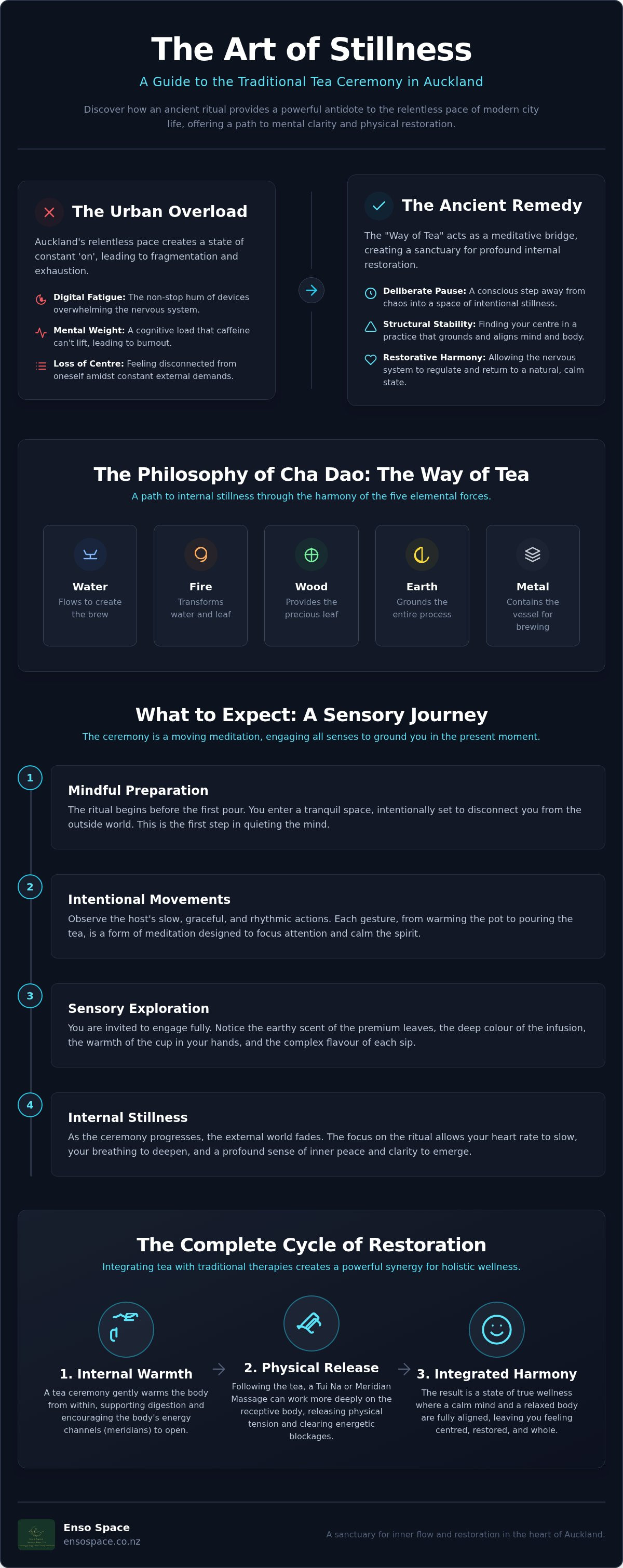
Modern life in Auckland moves at a relentless pace. Between the digital hum of our devices and the constant demands of a 2026 professional schedule, we often lose our centre. The "Way of Tea" serves as a vital antidote to this sensory overload. It functions as a moving meditation, where every gesture is intentional and every sip is a return to the self. By stepping into an intentional space, you allow your nervous system to regulate. You move from the "always on" state of digital fatigue into a state of restorative harmony. It's about finding structural stability in a world that feels increasingly fluid and fast.
Deeply rooted in Chinese tea culture, this practice isn't about consumption. It's about the link between the physical act of brewing and the abstract benefit of mental clarity. For many Aucklanders, this provides the "middle ground" needed to navigate a high-pressure environment without burning out. It creates a sanctuary where the mind can finally rest.
Auckland’s Growing Holistic Landscape
We're witnessing a significant shift in how we approach self-care. Standard spa treatments are evolving into culturally rich, holistic experiences that honour ancient wisdom. Auckland’s wellness scene is maturing, with a growing demand for authenticity over commercialised trends. As a premium wellness destination, Enso Space acts as a bridge between traditional philosophies and the modern lifestyle. We recognise that physical recovery is only one half of the equation; true wellness requires a peaceful mind and a steady spirit.
Newmarket has emerged as a central hub for this restoration. It's a place where you can transition from the external noise of the shopping district to the quiet sanctuary of a tea room in minutes. This proximity makes a traditional tea ceremony Auckland a convenient yet deeply transformative escape. It's a space where professional authority meets a gentle invitation to rest, ensuring you leave feeling not just relaxed, but truly whole.
Beyond the Brew: The Philosophy of Chinese Cha Dao
Balance. Harmony. Purity. These are the pillars of Cha Dao. Translating to "The Way of Tea," this ancient philosophy represents far more than a method for brewing a drink. It's a path toward internal stillness. When you participate in a traditional tea ceremony Auckland, you aren't just observing a performance; you're entering a space where the five elements align to ground your spirit. Water flows. Fire transforms. Wood provides the leaf. Earth grounds the tea. Metal contains the vessel. These elemental forces work in concert to mirror the natural cycles of the earth, creating a structural stability that helps quiet the racing thoughts of a busy mind.
Every movement within the ritual is rhythmic and intentional. The slow, graceful arc of the pour. The steady steam rising from the pot. These actions are designed to encourage deep, rhythmic breathing in both the practitioner and the guest. Understanding the history and etiquette of tea ceremonies helps us appreciate how every gesture serves a purpose. We select only premium leaves because quality matters for more than just flavour. High-grade tea carries a cleaner energetic flow, ensuring that the "Qi" or life force of the plant remains intact to support your own restoration.
The Connection to Meridian Flow
Warmth is the foundation of internal health. In traditional philosophy, the digestive system thrives on heat, which acts as the engine for energy distribution. Drinking warm, high-quality tea supports the body's internal energy balance, gently coaxing the meridians to open and flow. This is why a traditional tea ceremony Auckland is the ideal companion to a Chinese Meridian Massage Auckland. The tea provides the internal warmth that allows the physical work of the massage to settle more deeply into the tissues. Cha Dao serves as a structural link between physical health and mental clarity, ensuring that the body and mind move together in unison.
Sensory Engagement and Mindfulness
Mindfulness begins with the senses. We focus on the "Three Senses" to anchor ourselves in the present moment: seeing the leaf's unique shape, smelling the complex aroma, and finally, tasting the soul of the brew. The ritualistic pouring of water focuses the mind, stripping away the distractions of the outside world. Even the colour and clarity of the liquid in the cup act as a reflection of the present. A clear, vibrant tea suggests a clear, vibrant mind. You can experience this profound sense of oneness at our Newmarket sanctuary, where every cup is an invitation to return to your centre.
Comparing Traditions: Chinese and Japanese Tea Rituals in NZ
Precision versus flow. Etiquette versus energy. Auckland is home to a rich tapestry of tea cultures, each offering a unique pathway to peace. When you seek a traditional tea ceremony Auckland, it's helpful to understand that the Japanese and Chinese traditions serve different emotional and physical needs. The Japanese tradition of Chanoyu focuses on the aesthetic of wabi-sabi, where the beauty of imperfection and the precision of movement create a profound sense of respect and focus. It's an art form that demands your full attention. In contrast, the Chinese practice of Cha Dao prioritises the medicinal properties of the leaf and the cultivation of Qi, or internal energy. It's a more fluid, adaptive experience designed to support your body's natural recovery processes.
Choosing the right ceremony depends on your personal wellness goals. If you crave structure and a deep dive into cultural etiquette, the Japanese path is rewarding. However, if your goal is restorative harmony and a deeper connection to your physical self, the Chinese approach offers a more direct link to holistic health. Detailed accounts of Chinese tea ceremonies and traditions highlight how these rituals have always been intertwined with daily well-being rather than being reserved solely for formal occasions.
Ritual vs. Restoration
The physical experience of these two traditions differs significantly. Japanese ceremonies typically involve powdered Matcha whisked into a frothy, vibrant green tea. The movements are highly formalised and strictly choreographed. Chinese ceremonies usually focus on whole-leaf teas like Oolong or aged Pu-erh. Instead of a single bowl, the tea is steeped multiple times in small vessels. You observe the evolution of flavour. You notice how the tea changes from the first steeping to the fifth. This slow, unfolding process is why the Chinese approach is often preferred for post-massage integration. It allows the warmth to penetrate the tissues gradually, sustaining the benefits of your treatment.
Finding Your Centre in Auckland
Geography often dictates the atmosphere of your experience. You might find Japanese tea clubs in areas like Blockhouse Bay, where the focus is often on community learning and practice. These are excellent for those wanting to join a club and master a skill. However, if you're looking for a "sanctuary" environment, the wellness-focused spaces in Newmarket offer a different perspective. Traditional Chinese wellness Auckland prioritises your individual recovery over group instruction. It's a private, intentional moment of restoration. This shift from a public club to a private sanctuary ensures that your traditional tea ceremony Auckland remains a personal journey toward stillness rather than a social obligation.
What to Expect: A Guide to Your First Tea Experience
Transition. Shedding. Presence. Your journey into a traditional tea ceremony Auckland begins long before the first pour. We recommend arriving at least fifteen minutes early. This time isn't for administrative tasks; it's for your spirit. Use these moments to shed the external world. Leave the frantic energy of the city at the door. As you enter the tea space, you'll feel the atmosphere shift. The lighting is softer. The air is still. You're invited to leave your footwear and your worries behind, preparing your mind for the subtle dialogue between leaf and water.
The experience begins with a gentle introduction to the day's selected tea leaves. You'll observe their shape, colour, and dry fragrance. This is the "Welcome." Once the leaves are chosen, the master begins the ritual by washing the tea. This act serves a dual purpose: it cleanses the leaves and "awakens" their spirit. You'll watch the first rinse being poured away, a symbolic gesture of letting go of the old to make room for the new. The tasting that follows involves small, intentional sips. It's a sensory experience designed to be savoured. You aren't just drinking; you're listening to the story of the tea.
Etiquette for the Modern Guest
Silence is a gift. In our sanctuary, quietness is welcomed rather than feared. Movements should be soft and deliberate. When you hold your cup, use both hands to honour the heat and the craft of the vessel. This creates a stable foundation for your focus. A critical part of the modern ritual is the "digital detox." We ask that phones remain out of sight and on silent. By removing the digital hum, you fully engage your senses. You become a participant in the moment rather than a spectator of a screen.
The Physical Response to Ritual
Watch your breath. As the ceremony progresses, you'll likely notice a natural drop in your heart rate. The rhythmic movements of the master act as a metronome for your own nervous system. The warming sensation of the tea aids in "Qi" circulation, gently moving energy through the body's meridians. The scent of roasted Oolong can trigger immediate nervous system relaxation, grounding you in a state of restorative harmony. To begin your own journey of stillness, we invite you to book your tea ceremony experience and rediscover your internal flow.
The Enso Space Signature: Tea as the Pillar of Restoration
Stillness. Recovery. Integration. At Enso Space, we believe that true wellness isn't a destination but a continuous flow. Our traditional tea ceremony Auckland serves as the soul of our "Feel Better" philosophy. It's the point where physical therapy meets mental stillness. While many seek us out for our technical expertise in meridian health, they often discover that the tea ritual is what makes the restoration permanent. It provides the structural stability needed to carry the benefits of treatment back into the bustle of the city. Our Newmarket sanctuary remains a premium destination for those who value authenticity and a quiet, poetic invitation to rest.
Deep tissue release requires a gentle conclusion. We specifically recommend a tea session following Tui Na massage benefits Auckland. Tui Na is an active, vigorous practice that moves stagnant energy and releases deep-seated tension. It's a transformative physical experience. However, this release can leave the body feeling open and sensitive. The fluid grace of the tea ritual provides the necessary "middle ground" to settle this energy. It creates a synergy where the deep tissue release is anchored by the quiet, warming presence of the cup.
A Complete Wellness Journey
Massage prepares the body; tea prepares the mind. Our practitioners use the ceremony to help guests "ground" before they return to the city streets. We carefully select specific vessels and seasonal teas to match Auckland’s changing climate. In the damp cold of a Waitakere winter, we might choose a warming, aged Pu-erh to stoke internal fire. In the humid heat of a central city summer, a lighter, clarifying Oolong might be more appropriate. This attention to detail ensures that your internal environment remains balanced regardless of the external weather. It's about finding a center in every season.
Join the Enso Community
Restoration thrives on consistency. For those seeking regular ritualistic restoration, we offer our Annual Wellness Membership. For exactly NZD 200, members receive priority booking and invitations to exclusive wellness events. These gatherings often include specialised tea and wellness workshops where you can deepen your understanding of traditional philosophies. It's about building a foundation for long-term health rather than a fleeting moment of calm. You can book your combined massage and traditional tea ceremony Auckland experience through our Newmarket sanctuary, taking the first step toward a more balanced state of existence.
Return to Your Centre
Stillness is a choice. We've explored how a traditional tea ceremony Auckland acts as a vital bridge between physical recovery and mental clarity. It's a ritual that honours the five elements, providing the structural stability your spirit needs to navigate the city's frantic pace. By aligning the internal flow of your body with the ancient wisdom of Cha Dao, you create a space where restoration becomes permanent. You don't just feel better for a moment; you learn to live better.
Our premium wellness sanctuary in the heart of Newmarket offers expertly guided rituals by practitioners of traditional Chinese wellness. Whether you're seeking a solitary moment of peace or a holistic conclusion to your massage, we invite you to Book Your Authentic Tea Experience at Enso Space. For those committed to regular restoration, our Annual Wellness Membership is available for NZD 200, offering priority access to our community of calm. Rest. Breathe. Restore. Step out of the noise and into the light of your own presence.
Frequently Asked Questions
What should I wear to a traditional tea ceremony in Auckland?
Comfortable, loose-fitting clothing is the ideal choice for your ceremony. You'll be invited to sit in a relaxed position for an extended period, so avoiding restrictive waistbands or heavy denim is recommended. Soft fabrics help you remain present without the distraction of physical discomfort. Most guests choose casual attire or yoga-style wear that allows for easy, rhythmic breathing as they transition from the busy streets of Newmarket into our sanctuary.
Do I need to have prior knowledge of tea etiquette before visiting Enso Space?
No prior knowledge or experience is required to enjoy a traditional tea ceremony Auckland at our sanctuary. Our expert practitioners act as your guide, gently explaining the history of the leaves and the significance of each movement. We welcome you to arrive with an open mind and a willing heart. The ritual is designed to be a discovery, where the master handles the technical etiquette while you simply focus on the sensory experience and internal flow.
How long does a typical tea ceremony experience last?
A typical tea ceremony experience usually lasts between forty-five and sixty minutes. This duration allows enough time for the "awakening" of the leaves and multiple steepings of the chosen brew. We intentionally move at a slow, methodical pace to encourage your nervous system to regulate. It's a structured pause in your day that ensures you don't feel rushed, allowing the meditative benefits of the ritual to settle deeply before you return to your routine.
Can a tea ceremony really help with stress and anxiety?
Yes, the ritual is specifically designed to alleviate mental fatigue and sensory overload. By focusing on the "Three Senses", seeing, smelling, and tasting, you anchor your mind in the present moment. This sensory engagement helps quiet the internal chatter that often fuels anxiety. The combination of warmth, rhythmic movement, and intentional silence creates a safe space for your spirit to rest, providing a structural link between physical stillness and emotional peace.
Is the tea ceremony included with a massage at Enso Space?
The tea ceremony is a distinct, specialised service that can be booked independently or as a holistic conclusion to your treatment. While it isn't automatically included with every massage, we highly recommend pairing it with a Tui Na or Meridian session for complete restoration. This combination allows the physical release of the massage to be anchored by the mental stillness of the tea, creating a seamless journey from physical recovery to internal harmony.
What is the difference between Chinese and Japanese tea ceremonies?
The primary difference lies in the focus and the form of the tea. Japanese Chanoyu is highly formalised; it often uses powdered Matcha and focuses on precise etiquette and the aesthetics of wabi-sabi. Chinese Cha Dao, which we practice, prioritises the medicinal properties of whole-leaf teas and the flow of internal energy. It's a more adaptive, fluid ritual that focuses on the evolution of flavour and the cultivation of Qi through multiple steepings.
Is it possible to book a tea ceremony for a small group or couple?
Yes, we offer the opportunity to share this journey with others. You can book a traditional tea ceremony Auckland for a couple or a small, intimate group. Sharing the ritual can deepen your connection and provide a shared point of stillness in a fast-paced world. It's an excellent way to celebrate a special occasion or simply to support each other's wellness journey in a quiet, intentional setting that values depth over superficiality.
Are there any specific health conditions that should avoid hot tea rituals?
Most individuals find the warmth of the tea deeply beneficial, but those with specific sensitivities should take care. If you have conditions sensitive to caffeine, such as certain heart palpitations or sleep disorders, please inform your practitioner so we can select a suitable brew. Likewise, individuals with heat sensitivities or those who are pregnant should consult their healthcare provider. We prioritise your safety and will always tailor the experience to support your long-term well-being and comfort.


