

Exertion. Impact. The heavy pulse of a heart finding its rhythm. Most athletes believe the workout ends at the final rep, yet the true transformation begins in the silence that follows. When persistent soreness shadows your professional life and physical tiredness turns into a heavy sense of burnout, your body is calling for more than just rest. It's seeking a return to centre. Finding a professional post-workout massage Auckland athletes trust is the vital link between the storm of training and the stillness of recovery.
You know the frustration of a recovery that feels incomplete, especially when clinical environments feel cold or hurried. We believe that true restoration requires a sanctuary where your nervous system can finally settle. This guide reveals how a holistic approach can transform your post-training tension into a state of balanced vitality. We'll explore the path to faster recovery through traditional techniques like Tui Na and Chinese Meridian massage, ensuring you return to training with a clear mind and a supple body. From reducing mental stress to choosing a premium space to switch off, you'll learn how to honour your body's need for deep, intentional rest.
Key Takeaways
- Shift your mindset from "powering through" to intentional restoration to avoid the physical burnout and injury risks common in Auckland’s high-intensity fitness culture.
- Compare the structural benefits of Western deep tissue with the energetic flow of Tui Na to find the best post-workout massage Auckland has to offer for your specific training style.
- Identify the ideal timeframe for your recovery session and learn how simple hydration habits can maximise the internal "flush" of tension from your muscles.
- Discover why a professional’s diagnostic touch and a meditative environment in Newmarket offer restorative benefits that a foam roller or home tool simply cannot replicate.
- Learn how incorporating traditional meridian care and tea culture creates a vital bridge between physical repair and a lasting sense of internal harmony.
The Importance of Post-Workout Recovery in Auckland’s Active Culture
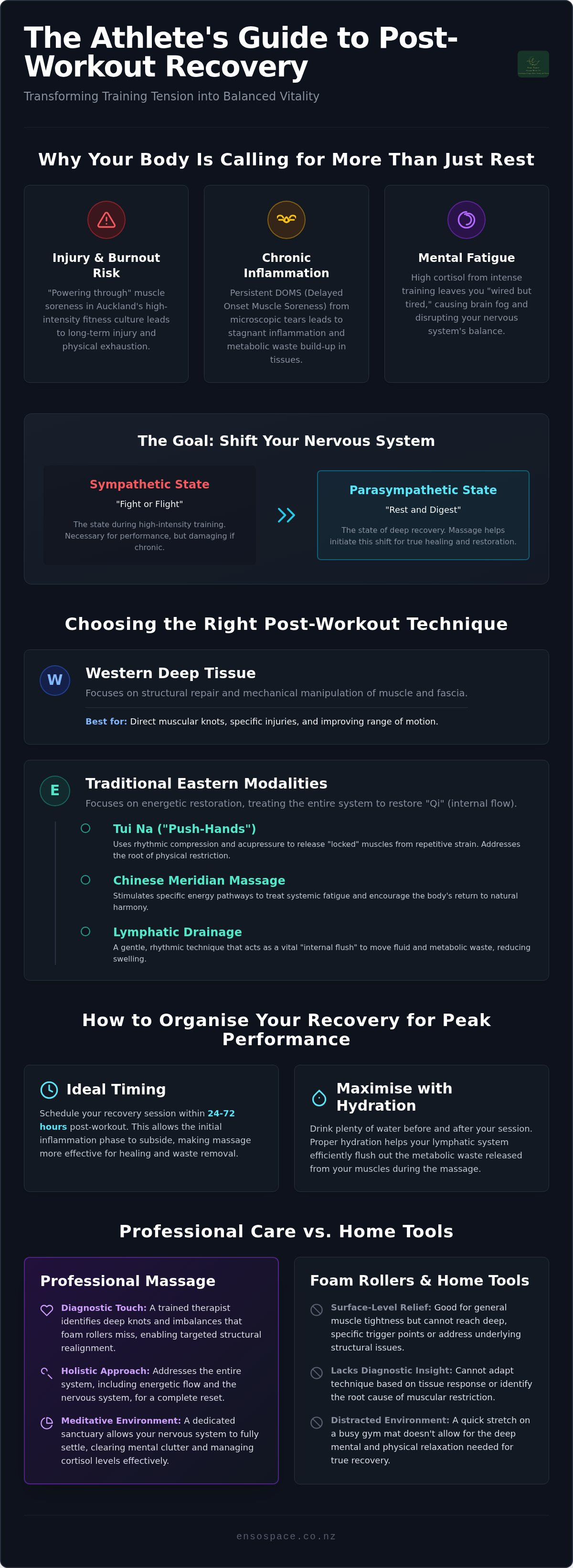
Exertion. Recovery. The necessary breath between the two. Auckland is a city defined by its movement. From the endurance of a Coast-to-Coast training run to the explosive power found in local CrossFit boxes, our bodies are constantly tested. Yet, the common habit of "powering through" muscle soreness is often a path to stagnation. When you ignore the persistent ache in your limbs, you risk more than just a slow workout; you risk long-term injury and physical burnout. True vitality requires a rhythmic shift. High-intensity exertion must be met with high-intensity restoration. A professional post-workout massage Auckland athletes trust is more than a simple luxury. It's a necessary pivot. It moves the body from the sympathetic "fight or flight" state into the parasympathetic "rest and digest" mode. This is where the body truly heals.
Understanding DOMS and Muscle Fatigue
During a heavy session at the Domain, your muscle fibres undergo microscopic tearing. This is the foundation of growth, yet it triggers a cascade of inflammation. While inflammation is a natural response, chronic stagnation of this process leads to persistent DOMS. Massage therapy acts as a vital catalyst for clearing metabolic waste. Unlike a quick, distracted stretch on a gym mat, a professional recovery session in Newmarket uses targeted pressure to encourage lymphatic flow. It ensures that inflammation serves its purpose without becoming a permanent resident in your tissues. The diagnostic touch of a trained therapist identifies knots that a foam roller simply cannot reach, meaning a professional post-workout massage Auckland residents choose can facilitate a deeper structural realignment.
The Mental Side of Physical Exertion
Physical fatigue is rarely just physical. High-intensity training floods the system with cortisol. This hormone, while useful for performance, can leave a busy Auckland professional feeling "wired but tired" or trapped in a persistent brain fog. Effective recovery is about intentional cortisol management. By grounding the body in a serene, meditative environment, you allow the nervous system to finally settle. This process clears the mental clutter that accumulates during a frantic work week. Restoring your inner flow ensures that your training supports your lifestyle rather than draining it. It's about finding the middle ground between effort and ease; a bridge between the heat of the gym and the cool clarity of a focused mind.
Traditional vs. Modern: Choosing the Right Post-Workout Technique
Choice. Balance. The intersection of ancient wisdom and modern science. When selecting a post-workout massage Auckland athletes often find themselves at a crossroads between structural repair and energetic restoration. While Western techniques focus on the mechanical manipulation of muscle, traditional Eastern modalities look deeper. They seek the source of the blockage. They aim to restore the "Qi" or internal flow that high-intensity exertion can disrupt. By understanding the nuances of these traditions, you can tailor your recovery to the specific needs of your body and mind.
For those managing systemic fatigue, Chinese Meridian Massage offers a unique path. It doesn't just treat the muscle; it treats the entire system. By stimulating specific pathways, it encourages the body to return to its natural state of harmony. If your challenge is post-event swelling or a heavy feeling in the limbs, Lymphatic Drainage is your secret weapon. It's a gentle, rhythmic technique that assists the body in moving fluid and metabolic waste, acting as a vital internal flush. To complete the transition, Aromatherapy uses the elemental power of essential oils to soothe a central nervous system that's been pushed to its limit during a marathon or a match. It's about finding the middle ground where physical repair meets spiritual peace.
Tui Na: The "Push-Hands" Method for Athletes
Rhythm. Pressure. Oscillation. Tui Na, the ancient Chinese "Push-Hands" method, is a disciplined approach to physical restoration. It differs from standard massage through its use of rhythmic compression and targeted manipulation of acupressure points. This technique is designed to release "locked" muscles that have become rigid through repetitive strain. In the modern Auckland sports community, Tui Na is gaining traction because it addresses the root of physical restriction. It's a bridge between the physical and the energetic, ensuring that your body doesn't just feel better, but moves with a renewed sense of freedom. Research has shown that such targeted interventions are highly effective for alleviating post-workout muscle soreness and restoring peak performance.
Deep Tissue Massage: Releasing Chronic Tension
Foundation. Structure. Depth. There are times when your recovery requires a more robust intervention. You should choose Deep Tissue Massage Newmarket Auckland when you feel chronic tension that has settled into the deeper layers of your fascia. This is the structural support of your athletic performance, and it requires intentional, firm pressure to release. While you might experience the "good pain" of deep work, the long-term result is enhanced mobility and a reduction in the restrictive knots that hinder your stride. It's a powerful tool for those who demand the most from their bodies. If you're ready to begin your journey toward lasting balance, consider discovering a new rhythm of restoration that honours both your strength and your need for rest.
How to Organise Your Recovery for Peak Performance
Planning. Intention. The architecture of a balanced training cycle. Many athletes focus solely on the intensity of their effort, yet peak performance is often decided in the quiet hours between sessions. To truly benefit from a post-workout massage Auckland professionals recommend, timing is everything. If you seek to flush metabolic waste and reduce acute swelling, a gentle session within two hours of training is ideal. However, for deep structural work that addresses chronic knots, waiting 24 to 48 hours allows initial inflammation to settle, giving your therapist better access to the underlying tissues.
Communication is the bridge between a good session and a transformative one. You should always inform your therapist about where you are in your training block. Are you tapering for a race? Are you in the middle of a high-volume peak? This specificity allows for a tailored approach that respects your body's current state. Consistency, too, is vital. One-off sessions provide temporary relief, but regular maintenance creates a cumulative effect, building a more resilient foundation for future exertion. By making a post-workout massage Auckland athletes rely on a recurring part of your programme, you ensure that your progress isn't hindered by avoidable setbacks.
The Golden Window for Recovery Massage
Distinguishing between immediate recovery and deep structural work is essential for your athletic longevity. While a relaxation session can settle the nervous system immediately after a heavy lift, you should generally avoid intense deep tissue work in the 48 hours leading up to a major competition. This prevents the temporary "rebound" soreness that can interfere with peak power. Instead, organise your training diary to include regular visits to a wellness centre Auckland athletes trust, ensuring your recovery is as disciplined as your training itself.
Maximising the Benefits Post-Session
The restoration doesn't end when you leave the table. Hydration is the cornerstone of the "flush" that massage initiates. In our sanctuary, the tea ceremony isn't merely a gesture of hospitality; it's a functional step in rehydrating the fascia and supporting the effects on muscle recovery and performance. After your session, prioritise gentle movement. A slow walk or light mobility work helps maintain the internal flow established during your treatment. Avoid high-intensity exertion for at least 24 hours to let the structural changes integrate, preventing unnecessary soreness and allowing your body to find its new, balanced centre.
Addressing the #1 Objection: "Is Professional Massage Worth It?"
Value. Investment. The long-term view of a body in motion. It's common to view recovery as a cost, yet the true expense lies in the forced downtime of a preventable injury. A foam roller is a useful tool for daily maintenance, but it lacks the diagnostic intuition of a human touch. It cannot feel the subtle shift in tissue density or the specific origin of a radiating ache. Choosing a professional post-workout massage Auckland athletes trust means choosing a partner in your performance. It's about moving beyond the transactional back-rub and entering a space where your physical repair is part of a larger, meditative journey.
The "Enso Space" difference is found in the transition. From the moment you step off the street in Newmarket, the focus shifts from the ticking clock to your internal state. We don't just treat a muscle; we host an experience that includes traditional tea culture and a serene environment designed to quiet the mind. This holistic approach ensures that you aren't just physically recovered, but mentally refreshed for the challenges ahead. When your recovery environment feels like a sanctuary rather than a cold clinic, your nervous system can truly let go.
Preventative Care vs. Reactive Repair
Waiting for pain to arrive is a reactive strategy that often leads to diminished returns and prolonged breaks from training. Regular Chinese Meridian Massage Auckland offers a proactive alternative. It identifies subtle imbalances in your flow before they manifest as a debilitating strain or tear. This is particularly vital for the modern professional who balances a high-intensity training schedule with a sedentary 9-to-5 life. Maintaining your posture and mobility between workouts is the key to a sustainable athletic life. The return on investment is simple: a body that stays mobile, stays strong, and stays in the game.
The Value of a Wellness Membership
Consistency is the foundation of any successful training block. To make premium recovery sustainable for your budget, our Annual Wellness Membership for NZD 200 provides a pathway to regular restoration. It offers exclusive pricing that makes a recurring post-workout massage Auckland residents rely on much more accessible. Membership also grants priority booking, which is essential for those critical post-event Mondays when your body needs immediate attention. More importantly, it allows you to build a lasting relationship with a therapist who understands your body’s unique patterns and history. You can join our wellness membership today to begin prioritising your long-term vitality and performance.
The Enso Space Experience: A Sanctuary in Newmarket
Silence. Stillness. The shift from the external to the internal. Located at 17 Remuera Road, our sanctuary offers a deliberate pause in the heart of the city. While the hustle of Newmarket continues just beyond our doors, the atmosphere within is designed to slow your pulse and quiet the noise of a busy life. It is here that you find your centre. A professional post-workout massage Auckland athletes seek should be more than a physical appointment; it should be a total sensory reset. We have crafted a space that feels both like a professional clinic and a spiritual retreat, ensuring that the transition from high-intensity exercise to recovery is complete and intentional. It is a sanctuary where the ancient and the contemporary meet to support your athletic journey.
A Holistic Approach to Restoration
We believe that physical repair cannot be separated from mental peace. This is why we include a tea ceremony in our Traditional Chinese Wellness experience. It is a moment of focused stillness that rehydrates the fascia and settles the nervous system before your treatment begins. This ritual acts as a bridge, moving you from the heat of exertion into a state of restorative harmony. Our environment is clean, sustainable, and disciplined, reflecting the premium standards we uphold in every aspect of our practice. You will meet a team of experts who are fluent in both Eastern and Western modalities, bridging the gap between structural science and energetic flow. This oneness of approach ensures that every session contributes to our mission: to help you feel better, move better, and live better.
Your First Visit to Enso Space
Discovery. Connection. The path to restoration begins with understanding your unique physical narrative. During your initial consultation, we listen to your training history, your specific pains, and your long-term recovery goals. We don't offer generic routines or rushed, transactional care. Instead, we customise your treatment by blending techniques from Tui Na and Chinese Acupressure to Aromatherapy and Deep Tissue work. This personalised recovery plan ensures that your post-workout massage Auckland experience is precisely what your body needs to find its rhythm again. When you are ready to honour your body's need for deep, intentional rest, you can Book your post-workout recovery at Enso Space. It is the first step toward a more balanced state of existence, where every breath brings you closer to vitality.
Return to Your Centre of Vitality
Restoration. Repair. Resilience. The journey from exertion to restoration is not a passive one; it's a choice to honour the body's need for structural repair and energetic balance. By understanding the timing of your recovery and the specific benefits of traditional techniques like Tui Na or Chinese Meridian work, you move beyond simple rest. You enter a state of active healing. A professional post-workout massage Auckland athletes choose provides the diagnostic touch that home tools cannot replicate, identifying imbalances before they become limitations.
At our sanctuary at 17 Remuera Road, we provide a meditative bridge between your training and your life. Our expert therapists blend ancient wisdom with modern discipline, ensuring every session begins with a grounding tea ceremony to settle your nervous system. This is the Enso Space difference. It's a commitment to your long-term well-being and peak performance. Ready to transform your recovery? Book your post-workout recovery session at Enso Space Newmarket and discover the rhythm of moving, feeling, and living better. Your body is the foundation of your journey. Treat it with the intention it deserves.
Frequently Asked Questions
How soon after a workout should I get a massage in Auckland?
You should ideally wait at least two hours for a gentle flush or 24 to 48 hours for deep structural work. This allows the initial heat and acute inflammation from your training to settle. By choosing the right window for your post-workout massage Auckland session, you ensure the therapist can access deeper layers without causing unnecessary discomfort. It's about listening to your body's rhythm and timing your restoration to match your training intensity.
Is Tui Na massage better than deep tissue for sports recovery?
Neither is inherently better; they serve different purposes within your recovery journey. Tui Na utilises rhythmic compression to restore energetic flow and release meridian blockages. Deep tissue focuses on the mechanical release of the fascia and structural tension. Many athletes find that alternating between these modalities provides the most balanced result. It's a bridge between the physical and the energetic, ensuring your body is both structurally sound and internally fluid.
Can a post-workout massage help with injury prevention?
Yes, regular sessions are a cornerstone of a proactive injury prevention strategy. Professional touch identifies subtle imbalances and "locked" muscles before they manifest as a debilitating strain. By maintaining your mobility and addressing knots early, you reduce the risk of compensatory patterns that lead to injury. It's an investment in your body's foundation. This preventative care ensures you stay consistent in your training without the setbacks of forced downtime.
What should I wear to my recovery session at Enso Space?
We recommend wearing comfortable, loose-fitting clothing to our Newmarket sanctuary. For most treatments, such as deep tissue or meridian care, you will be professionally draped with towels to ensure your comfort and privacy. If you are receiving a traditional Tui Na session, this can sometimes be performed through light clothing. Our priority is your sense of safety and tranquility. We provide everything you need to transition from the city's hustle into a state of rest.
How often should athletes get a professional massage?
Most serious athletes find that a fortnightly or monthly session provides the necessary maintenance for a high-intensity lifestyle. If you are in a peak training block or preparing for an event, weekly sessions may be more beneficial to manage the increased physical load. Consistency is the key to lasting change. By establishing a regular rhythm of restoration, you build a more resilient system that can handle the demands of your training cycle.
Is it normal to feel sore the day after a deep tissue recovery massage?
It is perfectly normal to experience "rebound" soreness for 24 to 48 hours after a deep tissue session. This sensation is often described as a mild ache similar to the feeling after a heavy workout. It's a sign that your tissues are integrating the structural changes made during the treatment. We recommend hydrating well and engaging in gentle movement to help your body find its new centre of balance during this restorative window.
Does Enso Space offer memberships for regular recovery sessions?
Yes, we offer an Annual Wellness Membership for NZD 200 to support your regular recovery goals. This membership provides exclusive pricing on our range of services, including Tui Na and meridian care. It's designed for those who prioritise long-term vitality over transactional fixes. Membership also grants you priority booking, ensuring you can secure your preferred time for a post-workout massage Auckland athletes trust during your most critical training weeks.
Will a recovery massage help with post-workout inflammation?
Recovery massage is highly effective at managing post-workout inflammation by stimulating lymphatic flow and circulation. This process assists the body in clearing metabolic waste that accumulates during intense exertion. While acute inflammation is a natural part of muscle repair, chronic stagnation can lead to prolonged soreness. Targeted pressure helps move this fluid, reducing the heavy sensation in your limbs and allowing you to return to your training with a renewed sense of lightness.


