

What if the persistent heaviness in your limbs isn't just simple exhaustion, but a quiet plea from your body's internal tides to find their way home? Stillness. Congestion. Weight. You've likely felt that stubborn puffiness in your face after a restless night or the uncomfortable tightness in your legs following a long-haul flight across the Pacific. It's a common, draining experience, yet this sense of being 'stuck' often masks a deeper need for systemic release and restorative harmony.
Choosing lymphatic drainage for swelling offers a meditative bridge between biological necessity and intentional, quiet rest. This rhythmic, holistic approach does more than just move stagnant fluid; it clears metabolic waste and returns your entire system to its natural state of equilibrium. We'll explore how this gentle path can alleviate your physical discomfort, sharpen your natural immune function, and transform a necessary treatment into a serene, life-affirming ritual.
Key Takeaways
- Silence. Flow. Renewal. Understand the lymphatic system as a silent, internal cleansing network that maintains your body’s delicate fluid balance.
- Rhythm. Pulse. Clarity. Learn how manual stimulation mimics your body's natural internal pulse to clear metabolic waste and restore biological equilibrium.
- Depth. Flow. Discern when your body requires intense muscle manipulation and when it truly needs lymphatic drainage for swelling to alleviate persistent heaviness.
- Preparation. Presence. Discover how to prepare for your session through mindful hydration and why your treatment begins by opening vital drainage centres at the neck.
- Integrated care. Explore how Eastern meridian principles and Western science unite at our Newmarket sanctuary to foster a state of 'Feel Better, Move Better, Live Better'.
Understanding Lymphatic Drainage for Swelling and Fluid Retention
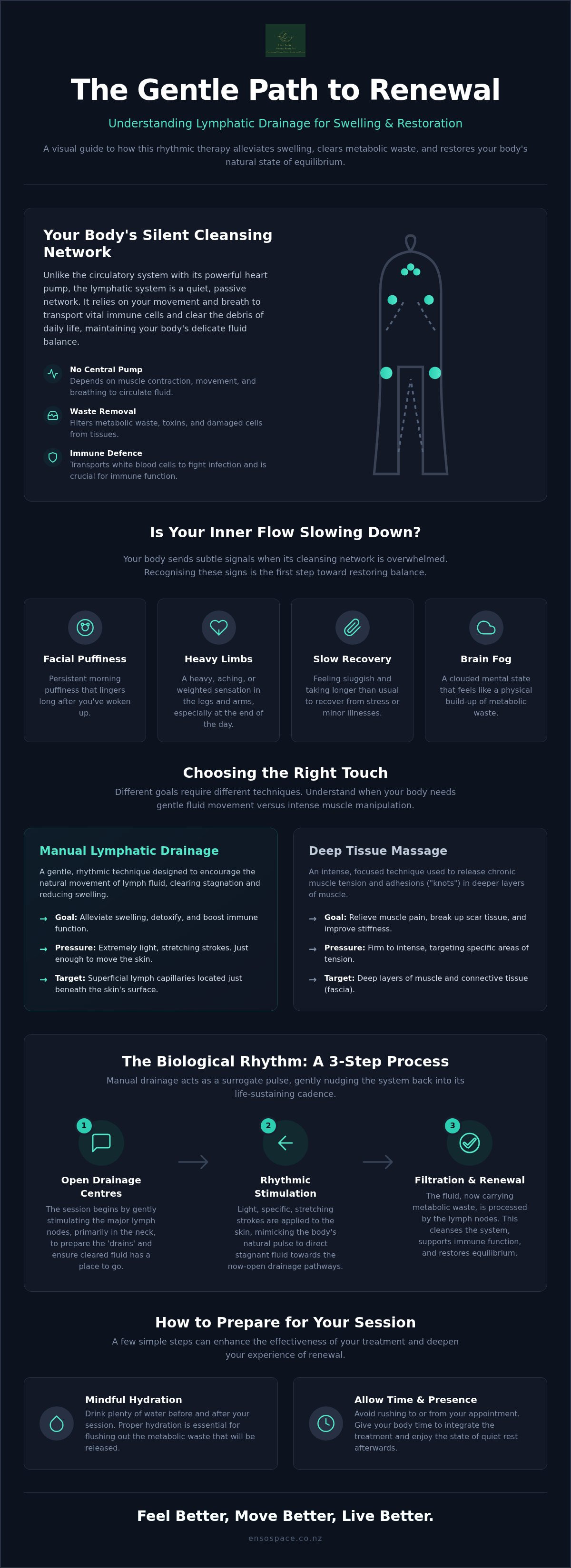
Stillness. Flow. Restoration. Think of your body as a landscape of interconnected waterways. While the heart acts as a tireless pump for your blood, the lymphatic system is a quiet, rhythmic network that relies on movement and breath to maintain its course. It is your body's silent cleansing network, responsible for transporting white blood cells and removing the debris of daily existence. When this system falters, the result is often a physical and emotional heaviness. Using lymphatic drainage for swelling is less a clinical procedure and more a gentle ritual of invitation, helping your body rediscover its natural, fluid state.
Fluid accumulation, or oedema, occurs when the delicate balance of your internal tides is disrupted. Instead of moving freely through the vessels, fluid becomes trapped in the interstitial spaces between your cells. This creates that familiar sense of 'puffiness' or a weighted sensation in the limbs. A non-invasive, rhythmic approach supports the body’s natural waste removal without the need for aggressive pressure. It's a way of clearing the path so your system can function with ease once again.
The Difference Between Medical and Wellness Drainage
It's helpful to distinguish between clinical lymphedema care and the restorative practice of wellness-focused drainage. While medical therapy addresses severe pathological blockages often following surgery, Manual lymphatic drainage (MLD) in a wellness sanctuary focuses on supporting general detoxification and vitality. Lifestyle factors specific to our lives in Auckland, such as long commutes on the motorway or hours spent stationary at a desk in Newmarket, often lead to a literal stagnation of these internal tides. Preventative care ensures your body remains a clear vessel. It maintains a sense of lightness and energy that carries you through the week, bridging the gap between ancient wisdom and modern necessity.
Common Signs of Lymphatic Stagnation
How do you know when your inner flow has slowed? The body speaks in subtle shifts of volume and sensation. You don't always need a medical diagnosis to recognise when your system requires support. You might notice:
- Persistent morning puffiness in the face that lingers well past your first cup of tea.
- A heavy, aching sensation in the legs by the end of a long workday.
- Slow recovery after periods of high stress or minor seasonal illnesses.
- A clouded sense of 'brain fog' that feels like a physical build-up of metabolic waste.
These aren't just inconveniences; they're signals that your system is overwhelmed. By prioritising lymphatic drainage for swelling, you aren't just treating a symptom. You're honouring the biological rhythm that keeps you vibrant, clear, and connected to your centre. It's an intentional step toward equilibrium in an often chaotic world.
The Biological Rhythm: How Manual Drainage Clears Metabolic Waste
Rhythm. Pulse. Life. Unlike the circulatory system, which relies on the heart to propel blood, the lymphatic system is a passive network. It has no central pump. It depends entirely on your breath, your movement, and the subtle contractions of vessel walls. When life becomes sedentary or stress takes hold, this natural rhythm falters. Using lymphatic drainage for swelling acts as a surrogate pulse, gently nudging the system back into its essential, life-sustaining cadence.
Manual stimulation mimics the internal pulse of your vessels through a specific, rhythmic sequence. It's a common misconception that more pressure leads to better results. In reality, the lymph capillaries sit just beneath the surface of the skin. If the touch is too heavy, these delicate structures collapse, halting the very flow you're trying to encourage. Gentle, stretching strokes are far more effective for this system than deep tissue manipulation. They create a vacuum effect that draws fluid toward the nodes for filtration and eventual elimination.
The Body's Rubbish Disposal Unit
Filtration. Defence. Vitality. Your lymph nodes are the major 'filtration centres' of the body, clustered primarily in the neck, armpits, and groin. Think of them as busy security checkpoints where metabolic waste, bacteria, and damaged cells are neutralised. When a practitioner performs lymphatic drainage for swelling, they are essentially 'unblocking' traffic jams in these fluid pathways. This process is a foundational element of Complete Decongestive Therapy, ensuring that your internal environment remains clean and your immune system remains resilient against outside threats.
Reducing Inflammation and Puffiness
Stagnation breeds inflammation. When fluid remains stationary in the tissues, it becomes a reservoir for metabolic by-products that trigger systemic puffiness and a general feeling of lethargy. By clearing this waste, you support skin clarity and noticeably reduce facial swelling, often resulting in a more 'sculpted' and rested appearance. Hydration is the essential partner to this manual work. Water provides the necessary medium for waste to be flushed away once the massage has set the fluid in motion. If you're feeling the weight of a busy Auckland week, our team can help you find your holistic massage and recovery through this gentle, intentional practice.
Choosing Your Treatment: Lymphatic Drainage vs Deep Tissue Massage
Depth. Surface. Intention. Choosing between these two paths requires an honest assessment of your body's current needs. While both offer profound benefits, they operate on vastly different layers of your being. Deep tissue massage is an architecture of pressure, designed to reach the dense fibres and structural foundations of your muscles. In contrast, lymphatic drainage for swelling is a rhythmic poem of touch, focused entirely on the fluid that resides just beneath your skin. Understanding this distinction is the first step toward true restoration.
The sensory experience is a study in contrasts. One involves the firm, purposeful manipulation of muscle knots; the other feels like a series of gentle, stretching waves. Applying intense pressure to an area already burdened by acute fluid retention can often be counterproductive. High pressure can compress the delicate lymphatic vessels, effectively closing the very gates you wish to open. If your primary concern is puffiness, post-surgical recovery, or a sense of internal congestion, a lighter touch is not just a preference. It is a biological necessity for clearing the path.
When to Seek Deep Tissue Relief
Tension. Knots. Structural release. This modality is your ally when the body feels physically bound by chronic muscle tightness or postural strain. For many active individuals and athletes, deep tissue massage Newmarket Auckland provides the necessary intervention to break down adhesions and restore range of motion. It is a grounded, vigorous experience that embraces the 'good pain' of trigger point release. It is ideal for those who feel physically 'tight' or 'stuck' in their movements, rather than generally heavy or swollen.
When Lymphatic Drainage is the Superior Choice
Flow. Lightness. Clarity. When you are navigating the aftermath of long-haul travel, recovering from a period of illness, or simply feeling the 'heaviness' of modern life, lymphatic drainage for swelling is the superior path. It is specifically designed to address fluid retention and systemic detoxification. Our approach to gentle lymphatic drainage Auckland creates a meditative, low-pressure environment that allows your nervous system to settle into a state of safety. It is a quiet invitation for the body to let go of what it no longer needs, leaving you feeling buoyant and renewed. This is the choice for when you feel 'puffy' or 'sluggish' rather than physically knotted.
A Guide to Your Session: What to Expect and How to Prepare
Arrival. Peace. Preparation. Entering our sanctuary in Newmarket is an invitation to leave the frantic pace of Auckland life behind. Before your practitioner begins the work, the journey starts with your own intentionality. Preparing your body to receive lymphatic drainage for swelling ensures that the pathways are clear and the internal tides are ready to move. This isn't just a physical appointment; it's a collaborative process between your body's natural wisdom and the practitioner's rhythmic touch.
The session itself follows a specific, biological sequence. We always begin at the base of the neck to 'open' the main drainage centres, ensuring there's a clear destination for the fluid we'll move from the limbs and face. The motions are rhythmic and wave-like, designed to induce a state of profound parasympathetic rest. As the practitioner works, you may feel a gentle warmth or a subtle tingling sensation as the stagnant fluid begins its journey toward filtration. It's a deeply meditative experience that often leads to a state of 'twilight sleep', where the mind drifts while the body heals.
Pre-Session Rituals for Optimal Flow
Drinking filtered water before your appointment is a non-negotiable step. Water acts as the essential carrier, providing the volume needed to transport metabolic waste once it's set in motion. We also recommend choosing loose, comfortable clothing that doesn't constrict the limbs or torso, as tight garments can impede the very circulation we aim to restore. Finally, organise your schedule to allow for a period of stillness immediately following your treatment. Rushing back into a high-stress meeting or a heavy gym session can jar the nervous system, potentially reversing the deep relaxation and physiological benefits achieved during the session.
The Post-Massage 'Flush' and Recovery
Release. Renewal. The 24 hours following your treatment are just as vital as the session itself. As your system processes the cleared waste, you might experience the post-massage 'flush'. This often manifests as increased thirst, a mild sense of fatigue, or more frequent urges to hydrate. These are positive signals that your body's successfully eliminating what no longer serves it. Support this process with light movement, such as a gentle walk through a local park or some soft stretching at home. To allow your liver to process the released waste without additional burden, we advise avoiding alcohol and caffeine for at least a day. If you're ready to begin this restorative journey, you can book your lymphatic drainage session at our Newmarket sanctuary today.
Holistic Restoration at Enso Space: Bridging Eastern Wisdom and Modern Detox
Harmony. Connection. Oneness. At Enso Space, we believe that true wellness is found at the intersection of ancient tradition and contemporary science. Our philosophy of 'Feel Better, Move Better, Live Better' is more than a motto; it's a commitment to integrated care that honours the whole person. When you seek lymphatic drainage for swelling at our Newmarket sanctuary, you're stepping into a space that bridges the gap between Western physiological understanding and the profound depths of Eastern healing arts. It is a journey that begins the moment you cross our threshold and continues long after you depart.
The Meridian Connection to Lymphatic Flow
Energy. Fluid. Unity. In the traditional view, the movement of Qi (energy) and the flow of physical fluids like lymph are inextricably linked. By integrating Chinese Meridian Massage Auckland principles into our drainage sessions, we don't just move fluid; we harmonise the body's energetic foundations. This Traditional Chinese wellness Auckland perspective allows us to focus on specific meridian points that act as gateways for both energy and detoxification. It's a comprehensive approach that ensures your 'inner flow' is restored on multiple levels, leading to a more resilient and vibrant state of being that resists the stagnation of a sedentary lifestyle.
The Tea Ceremony: Grounding Your Newfound Flow
Stillness. Warmth. Integration. The journey doesn't end when you leave the massage table. We conclude every session with a traditional tea ceremony, a moment of quiet reflection designed to ground your newfound flow. The warmth and antioxidants found in our carefully selected teas support the detoxification process, helping the liver and kidneys process the waste released during your lymphatic drainage for swelling session. It's a necessary pause. It provides the space to integrate the physical changes and emotional lightness before you re-emerge into the busy streets of Auckland. This ritual acts as a bridge, easing the transition from the sanctuary of the treatment room back into the rhythm of the world.
Consistency. Maintenance. Growth. Wellness isn't a single event but a rhythmic practice that requires dedication. To support those committed to long-term vitality and the maintenance of their internal tides, we offer the Enso Wellness Membership for NZD 200 per year. This programme is designed for busy professionals and seekers of balance who understand that regular care is the key to preventing stagnation. By making restorative work a consistent part of your life, you ensure that your body remains a clear, fluid vessel, capable of navigating the demands of modern living with grace and ease.
Reclaiming Your Natural State of Equilibrium
Stillness. Flow. Restoration. We've explored how the body's silent cleansing network relies on a rhythmic surrogate pulse to maintain its essential course. By choosing lymphatic drainage for swelling, you're doing more than just addressing physical puffiness. You're honouring a biological cadence that supports your immune system and restores mental clarity. Whether you're seeking relief from the heaviness of long-haul travel or the stagnation of a busy Auckland lifestyle, the bridge between Eastern meridian wisdom and Western science offers a gentle path back to your centre.
Our premium wellness destination in Newmarket is a sanctuary designed for this very transformation. With expert practitioners skilled in both Eastern and Western therapeutic techniques, we ensure your journey is both technically precise and deeply restorative. Your experience concludes with a traditional tea ceremony, providing the necessary space to integrate your newfound lightness before you re-enter the world. It's time to let your internal tides find their way home once more.
Book your restorative lymphatic drainage session at our Newmarket sanctuary and begin your journey toward lasting vitality. Your body already knows the way back to balance. We're simply here to help you find it.
Frequently Asked Questions
Is lymphatic massage for swelling safe for everyone?
Safety is our primary focus. While lymphatic drainage for swelling is a gentle, non-invasive practice, it's not suitable for individuals with certain medical conditions like acute infections, congestive heart failure, or active blood clots. These situations require the guidance of a medical professional. We always recommend consulting your doctor if you have underlying health concerns. Our practitioners ensure a safe, supportive environment tailored to your unique physical state.
How often should I get a lymphatic drainage massage in Auckland?
The ideal frequency depends on your specific wellness goals and lifestyle. For those addressing acute puffiness or post-travel heaviness, a series of weekly sessions often yields the most noticeable results. If you're looking for ongoing maintenance and detoxification, a monthly visit to our Newmarket sanctuary is usually sufficient. We'll work with you to create a personalised rhythm that supports your body's natural cycles and daily demands.
Will I see immediate results in my puffiness after one session?
You'll likely feel an immediate sense of lightness and reduced physical tension. Many guests notice a visible reduction in facial or limb puffiness shortly after their session concludes. However, the most profound benefits of lymphatic drainage for swelling are cumulative. Regular treatments help train your system to maintain its own flow more efficiently, leading to sustained energy levels and a more resilient internal environment over time.
What is the difference between lymphatic drainage and a standard relaxation massage?
The distinction lies in the depth and intention of the touch. A standard relaxation massage focuses on soothing the nervous system and easing muscle tension through moderate pressure. Lymphatic work uses extremely light, rhythmic strokes aimed specifically at the fluid just beneath the skin. It's a precise technique designed to move lymph toward the nodes for filtration, whereas relaxation massage is more about general comfort and muscle relief.
Why do I feel so thirsty or tired after a lymphatic session?
These sensations are natural signals that your body's processing and eliminating metabolic waste. As stagnant fluid is set in motion, your system requires extra hydration to flush these by-products away. The feeling of tiredness often stems from the deep parasympathetic shift that occurs during the session. It's a sign that your body's moving from a state of 'doing' into a restorative state of quiet healing.
Can lymphatic drainage help with facial swelling and skin clarity?
Yes, this treatment is exceptionally effective for restoring clarity to the face. By clearing stagnant fluid and waste from the delicate facial tissues, we can noticeably reduce puffiness and enhance your natural glow. This process supports better nutrient delivery to the skin cells, often resulting in improved texture and a more sculpted appearance. It's a gentle way to reveal your vitality without the need for invasive procedures.
Is the treatment painful if my limbs are very swollen?
No, the treatment should never be painful. Because the lymphatic vessels are located just beneath the skin's surface, the pressure used is incredibly light, similar to a soft brush or a gentle stretch of the skin. Even if your limbs feel tender or heavily swollen, this low-pressure approach is designed to be soothing and restorative. It provides significant relief without the discomfort often associated with deeper muscle work.
How does the Enso Space membership work for regular lymphatic care?
Our Annual Wellness Membership is designed to make consistent, restorative care an effortless part of your life. For an annual fee of NZD 200, you gain access to member benefits that encourage a regular rhythm of restoration. This programme is ideal for those who value long-term 'flow' maintenance and want to integrate lymphatic care into their wellness strategy. It ensures that your path to equilibrium remains a steady, sustainable journey.


